
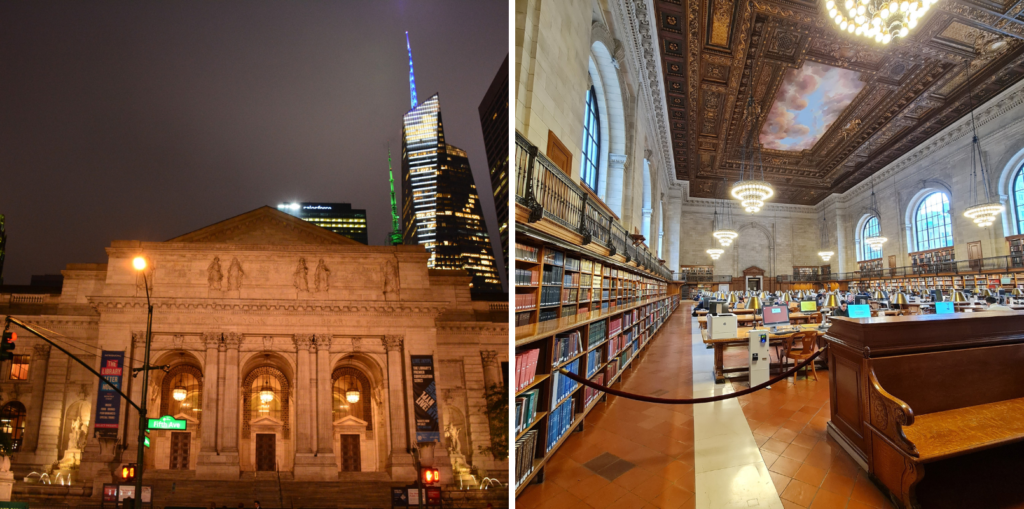
Nobody tells you to clear your afternoon before visiting a library. I certainly did not plan to, and yet there I was, two hours later, still inside, still finding new reasons to stay.
New York has no shortage of buildings that demand your attention. Most of them want your money first, your time second, and your admiration somewhere after that.
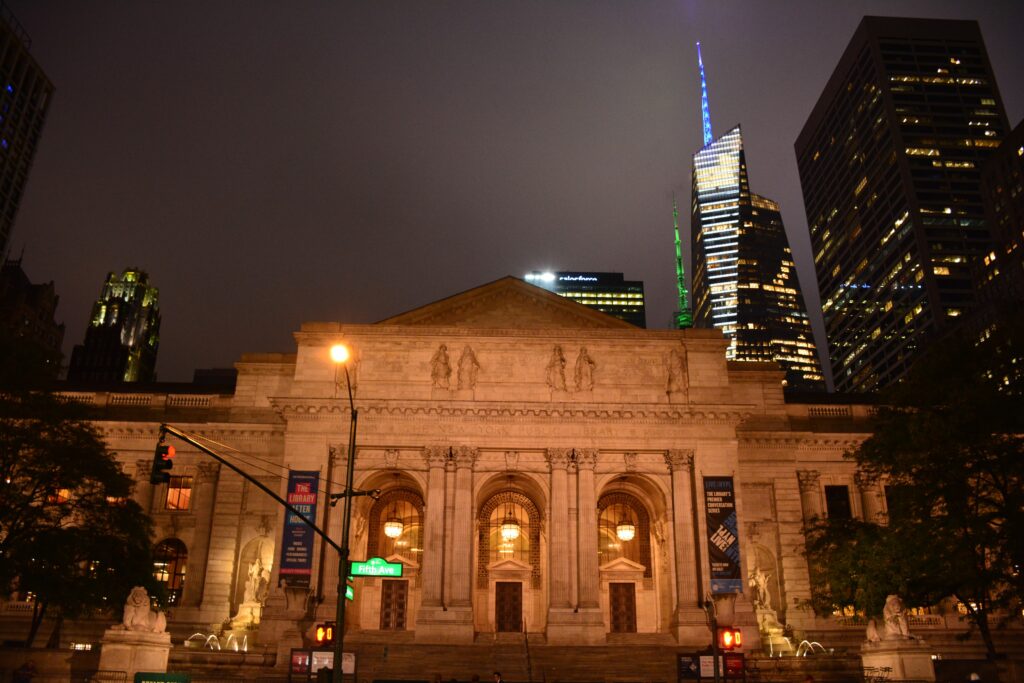
The building stopped me before I even reached the door. Something about the scale of it, the blinding white marble, the carved stone climbing several stories above Fifth Avenue, made the rest of Midtown feel like it was playing in a different league.
I had walked past grand buildings before and felt nothing in particular. This one was different, and I could not immediately explain why.
It was not the size alone, though the size is genuinely staggering. It was the feeling that something serious had been built here, something meant to outlast the people who built it, and that it had done exactly that.
This place has been earning that reaction since 1911.
Two Lions And A Whole Lot Of Marble
©New York Public Library – Stephen A. Schwarzman Building
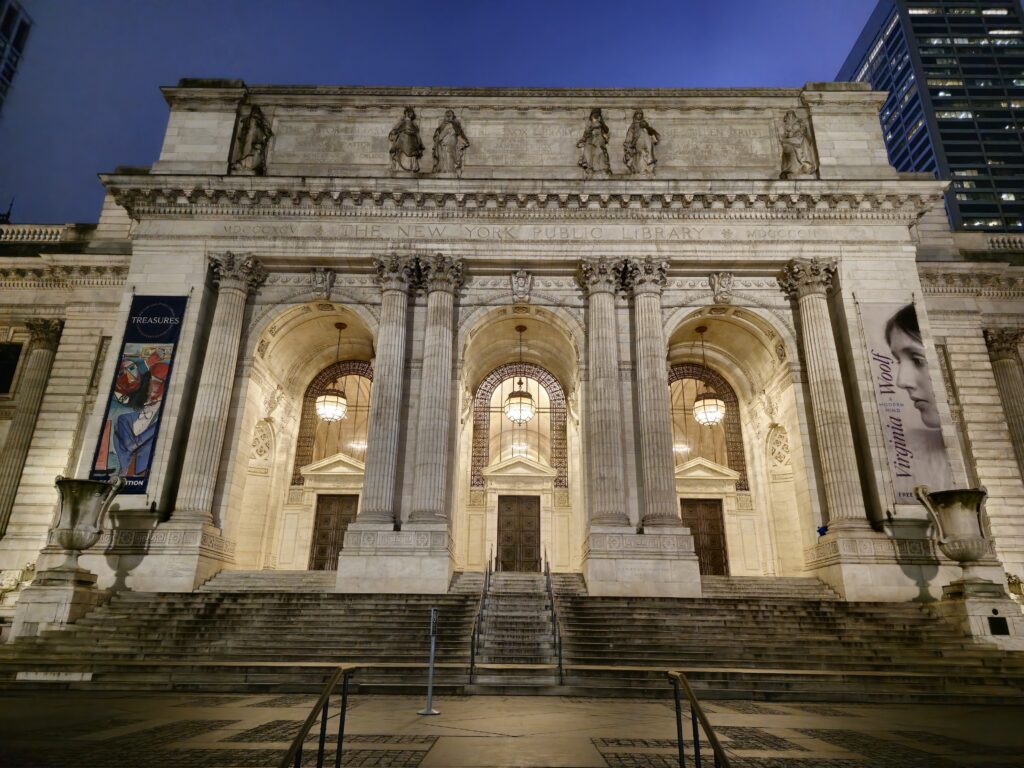
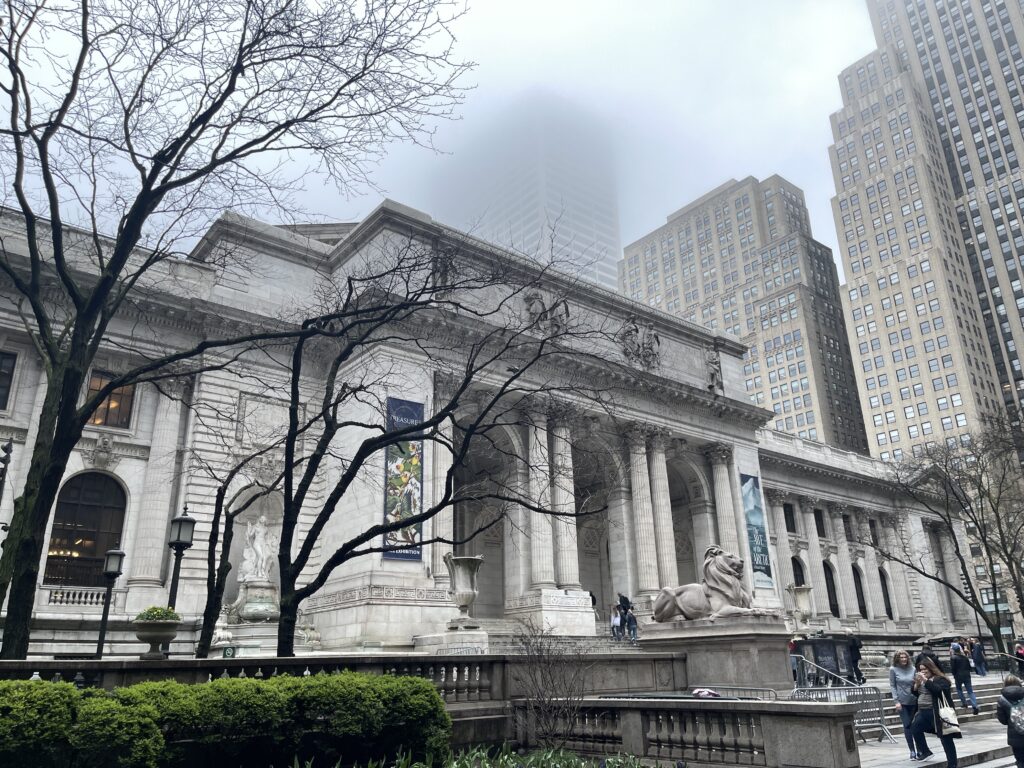
Most New Yorkers walk past them daily without a second glance. The pair of marble lions at the Fifth Avenue entrance of 476 Fifth Avenue, New York, NY 10018, have stood guard since the building opened in 1911.
Their nicknames, Patience and Fortitude, came from Mayor Fiorello La Guardia in the 1930s. He chose those names deliberately, believing those were the qualities New Yorkers needed most to get through hard times.
These two are, without question, the most dignified door attendants anywhere in the city. They do not blink, they do not charge admission, and they have never once called in sick.
The building itself is a designated National Historic Landmark, sitting between 40th and 42nd Streets. Entry is free, and accessible entrances are available at both 40th Street and 42nd Street for all visitors.
Getting here is easy, whether you arrive by subway or on foot through Midtown Manhattan. The main entrance on Fifth Avenue is hard to miss, mostly because the building looks like it belongs in ancient Rome, not New York.
A Blueprint Sketched On A Postcard
©New York Public Library – Stephen A. Schwarzman Building
It started with a sketch roughly the size of your palm. John Shaw Billings, the library’s first director, outlined the entire floor plan on a postcard in 1897, and that quick sketch eventually became one of the most ambitious public buildings in the country.
The cornerstone, weighing 7.5 tons, was laid in November 1902. Inside it, workers placed contracts, photographs, newspapers, and letters from the trustees and the mayor of the time.
Construction took 16 years from design to completion, which puts your home renovation timeline in perspective. The architectural firm Carrere and Hastings won the design competition over some of the most respected architects of that era.
The building opened to the public on May 23, 1911, and drew crowds immediately. By the 1920s, it was already welcoming four million visitors every single year.
The Amount Of Marble Will Make Your Head Spin
©New York Public Library – Stephen A. Schwarzman Building
The exterior alone consumed 530,000 cubic feet of Vermont marble. That is six times the combined marble used in both the New York Stock Exchange and the Chamber of Commerce.
When it opened, it was the largest marble structure in the entire United States. The Astor Hall entry room remains the only interior space in the entire city constructed entirely from marble.
Running your eyes across the facade, you notice the ornate detailing that covers nearly every surface. It is the kind of building that makes you feel slightly underdressed just standing near it.
The renovation between 2007 and 2011, backed by a $100 million gift from businessman Stephen A. Schwarzman, restored much of the exterior’s original brilliance. Three thousand cracks were repaired, and the marble was cleaned to something close to its original glow.
The Reading Room That Stops You Mid-Step
©New York Public Library – Stephen A. Schwarzman Building
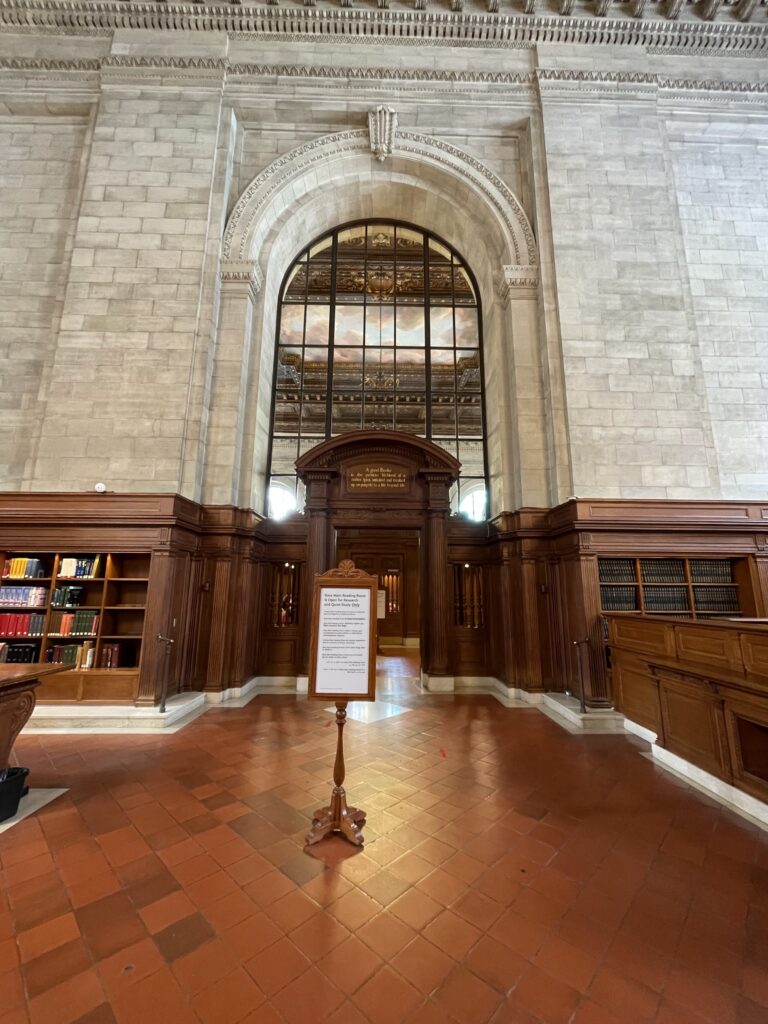
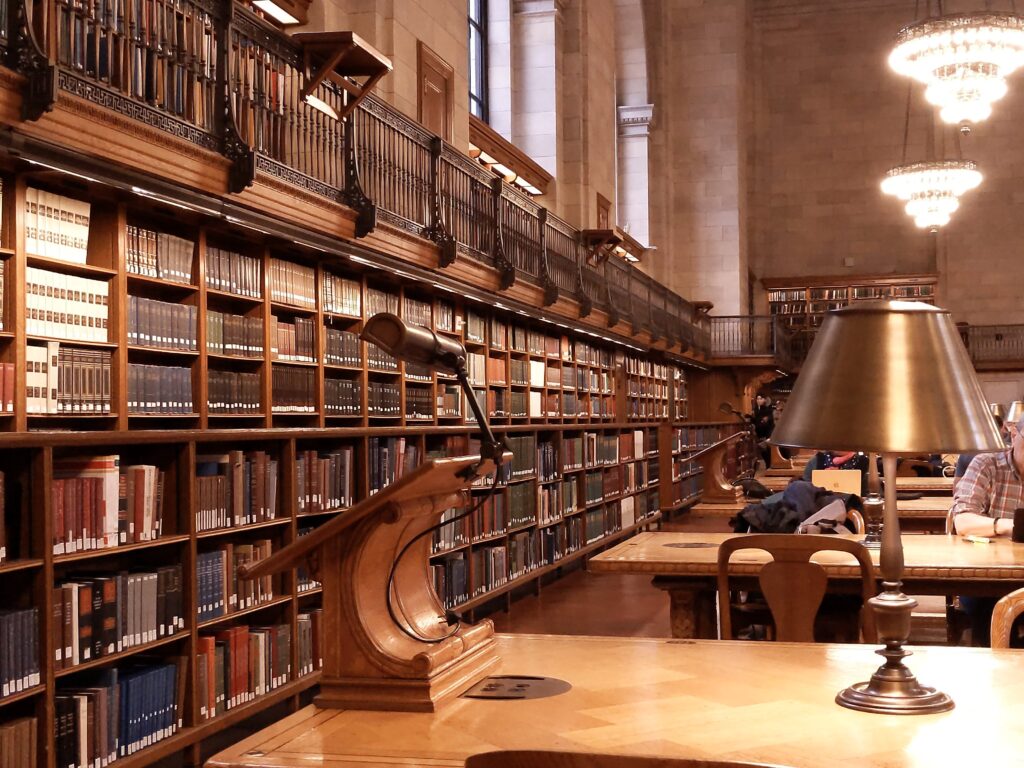
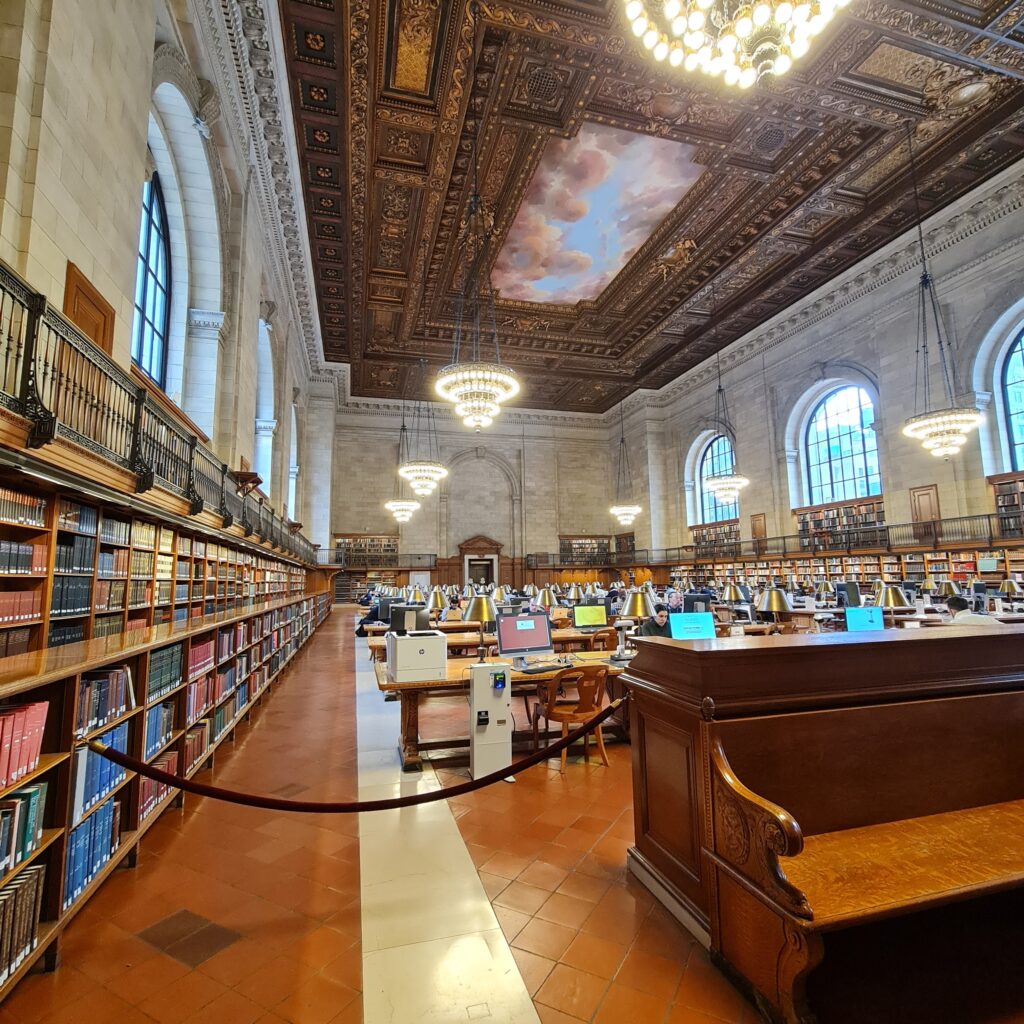
Nothing quite prepares you for the Rose Main Reading Room. It stretches 297 feet long and 78 feet wide, with a ceiling that climbs 52 feet overhead.
Circular chandeliers hang in stacked tiers from a painted ceiling, flooding the space with warm light. Everyone sitting beneath them looks like they are composing something that will one day be considered important literature.
Large arched windows with bronze frames line the upper walls, pulling in natural light from both sides. The room manages to feel both cathedral-grand and genuinely functional at the same time.
Researchers from around the world come specifically to sit at these long wooden tables. There is a particular kind of silence here that feels earned rather than enforced.
The painted ceiling above features clouds and sky, giving the whole room a sense of open air despite being entirely indoors. It is the kind of space that makes you want to write something, even if you only came in to get out of the rain.
Fifteen Million Items And Counting
©New York Public Library – Stephen A. Schwarzman Building
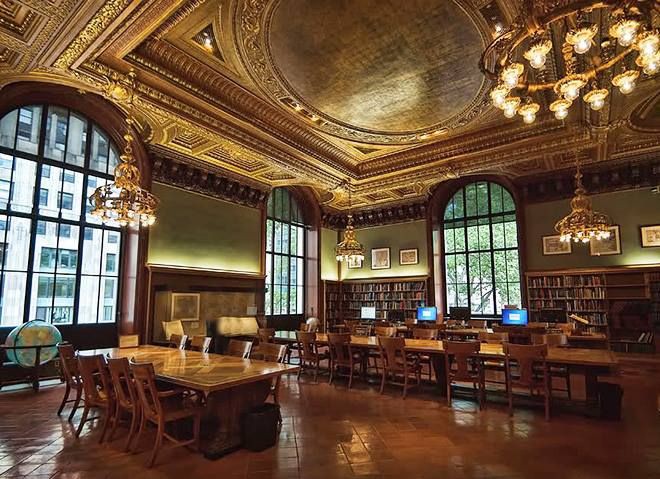
The collections here span far more than books. Medieval manuscripts share shelf space with ancient Japanese scrolls, baseball cards, dime novels, and an impressive run of comic books.
Materials in over 1,200 languages and dialects are represented across the collections. Somewhere in this building there is almost certainly a document written in a language you have never encountered.
The holdings range from priceless rarities in the Rare Books division to current newspapers from all over the world. During World War II, Allied military intelligence used the Map Division here to research coastlines in active combat zones.
The Manuscripts and Archives division holds oral histories that capture voices from communities long since transformed. Television journalists consulted the Slavic and Baltic Division here when covering the collapse of the Soviet Union.
The Treasure Exhibition You Cannot Afford To Miss
©New York Public Library – Stephen A. Schwarzman Building
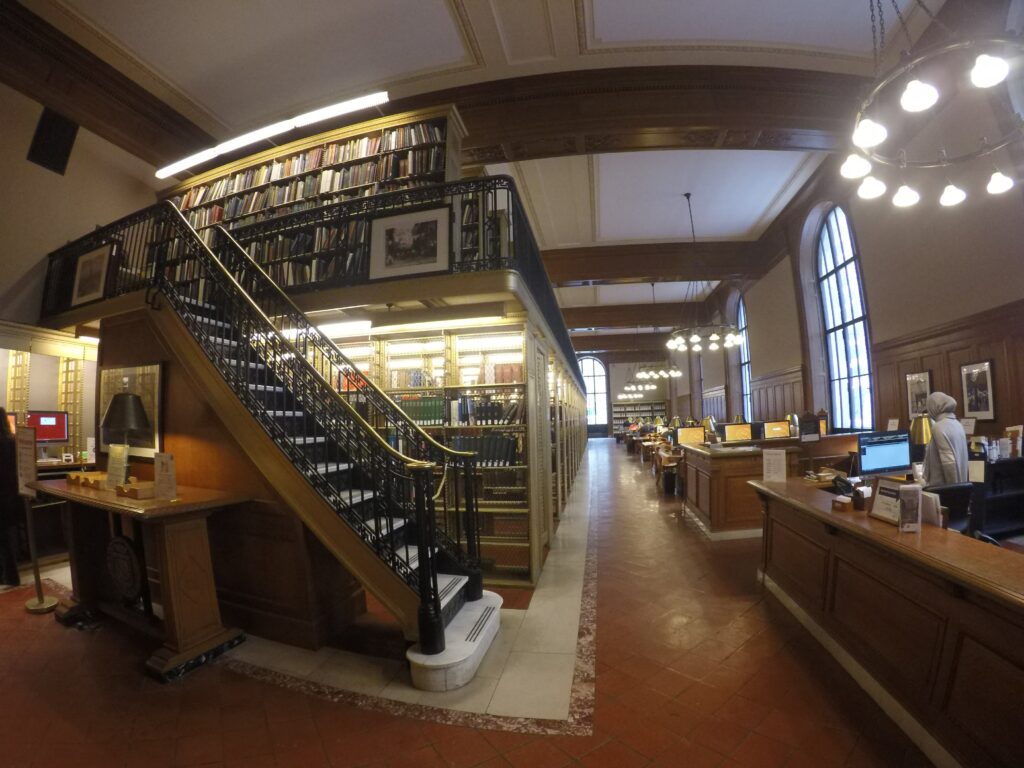
Some rooms ask you to slow down, and this is one of them. The Polonsky Exhibition of The New York Public Library’s Treasures puts some of the most extraordinary items from the collection directly in front of you.
Two copies of the First Folio of Shakespeare’s works are here. So is the earliest known copy of the “Nican Mopohua,” a 1531 narration of the apparition of Our Lady of Guadalupe to a Mexican peasant.
A complete set of the South Polar Times from 1902 to 1911 sits among the holdings, with contributions from Robert Scott and Ernest Shackleton. These are the journals of real expeditions into places no one had mapped yet.
The exhibition also displays the pictorial history of the Enola Gay. The breadth of what is on view here makes every other museum lobby feel slightly ordinary by comparison.
An Entire Library Hiding Beneath A Park
©New York Public Library – Stephen A. Schwarzman Building
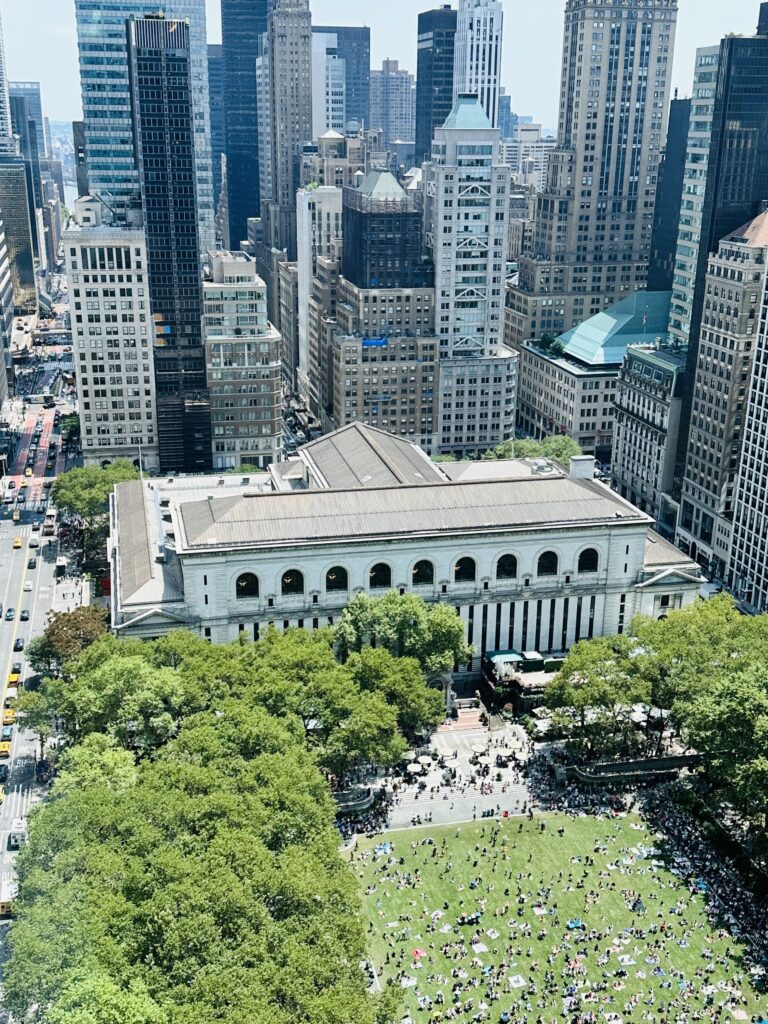
Standing in Bryant Park behind the building, the ground beneath you is far more interesting than it appears. The Milstein Research Stacks are a two-level, subterranean preservation environment sitting directly under the park.
They hold more than four million books and archival materials in a state-of-the-art climate-controlled space. The park above gives absolutely no hint that this much organized human knowledge exists directly beneath the grass.
The stacks connect to the building and support the research collections held above ground. Requesting materials from them is part of the standard research process at the Schwarzman Building.
This underground addition was completed in 1991 and significantly expanded the library’s on-site capacity. It is a practical solution to a very specific problem: where do you put four million more books in the middle of Midtown Manhattan.
A History That Outlasted Every Trend
©New York Public Library – Stephen A. Schwarzman Building
This building has been part of public life longer than anyone currently alive can personally remember. It opened in 1911, survived multiple economic downturns, two world wars, and a serious proposal in 2012 to gut it and turn it into a circulating library.
That 2012 plan was stopped in 2014 after significant public opposition. It was described at the time as cultural vandalism, and a lot of people agreed.
The library was formed from the consolidation of the Astor and Lenox Libraries in 1895. Both had financial difficulties, and the Tilden Trust provided the funding that made a new public institution possible.
The south courtyard once hosted puppet shows, amateur theater, and at least one actual circus. That kind of history does not fit neatly on a plaque, but it tells you something important about the kind of place this has always been.
Free, Open, And Genuinely Worth The Detour
©New York Public Library – Stephen A. Schwarzman Building
There is something almost radical about a building this grand charging nothing at the door. The Stephen A. Schwarzman Building has operated on the principle of free and equal access since it first opened to the public.
All public service areas are wheelchair accessible, and the building offers a self-guided audio tour available in English, Spanish, and Mandarin through the free Bloomberg Connects app. That alone makes planning a visit easier than most places twice the price.
The Library Shop and Café on the first floor is run in partnership with Amy’s Bread, which gives you a reasonable excuse to linger well past your planned departure time. Good coffee and 15 million books nearby is a combination that is difficult to argue with.
A docent-led tour is also available for those who want context with their architecture. However you choose to explore it, the building rewards time, and it is entirely prepared to give you more than you came for.